






The Department of Homeland Security (DHS) has been operating without funding for a month—the remnant of a U.S. government shutdown that ran from Jan. 31 to Feb. 3. The shutdown was relatively brief, with Congress quickly resolving funding for most agencies. Although DHS remains unfunded, policy experts called the broader shutdown’s impact “negligible.”
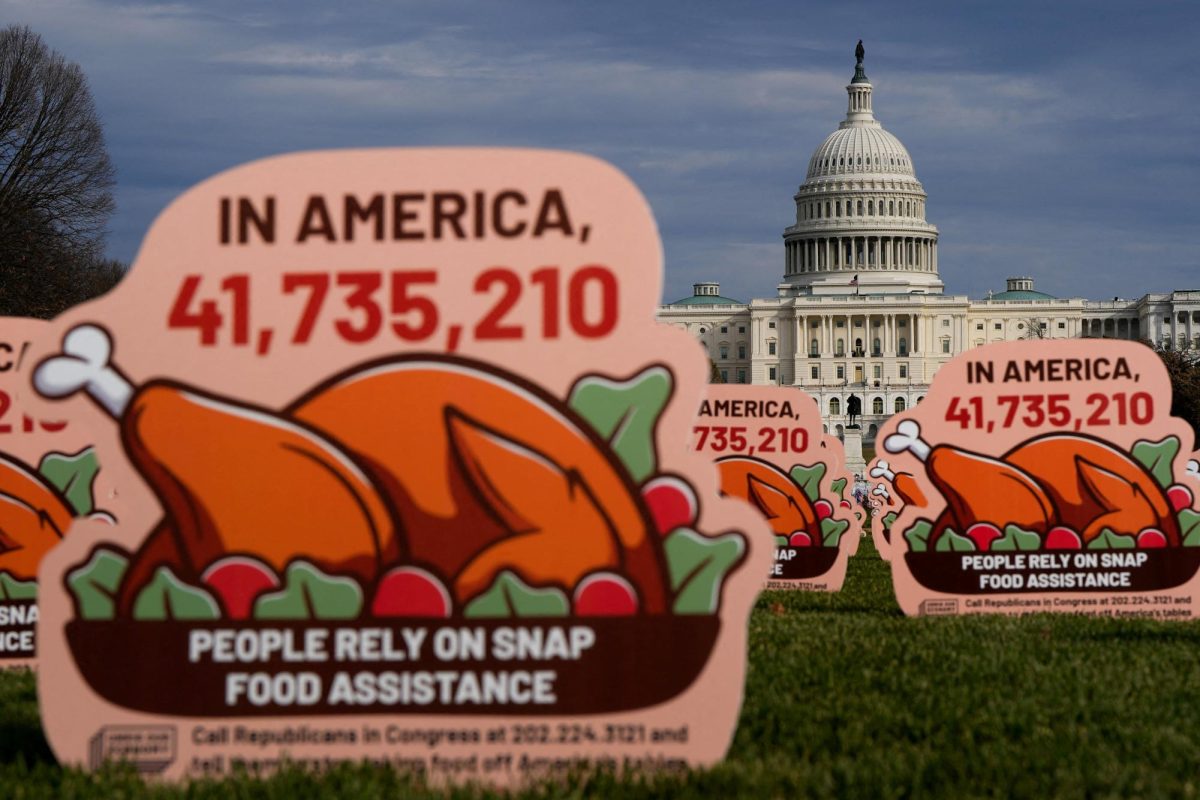
For many Americans, however, the four-day shutdown felt more than “negligible.” If you were one of the 42 million whose Electronic Benefit Transfer (EBT) cards stopped processing during the record-breaking November 2025 shutdown, headlines warning of another government funding lapse might have caused your stomach to drop. For the 26 million beneficiaries in families with children—about 63% of all Supplemental Nutrition Assistance Program (SNAP) participants—a TV screen reading “GOVERNMENT SHUTS DOWN” may evoke fewer thoughts of short-term congressional bargaining than it does memories of dwindling pantries.
For other Americans, these four days were also more than “negligible”—only in a different way. Many individuals viewed the brief shutdown as a symbolic reprieve from government excess, a reminder of the longer November 2025 shutdown that, in their eyes, demonstrated inefficiency and error more than it disrupted American life. Indeed, many Americans, including President Trump, consider SNAP emblematic of that familiar government trifecta: waste, fraud, and abuse.
Four months after the November shutdown ended, it’s worth taking a look at how SNAP beneficiaries were actually affected by the disruption. Hamilton’s neighbor, Syracuse, and the wider Central New York region offer a close-up perspective of how these benefits impact families and their communities. Placing these stories beside a broader, national analysis allows us to assess both SNAP’s economic critiques and often sensationalized claims of fraud.
While the program is certainly imperfect, SNAP remains essential to millions of families and strengthens the local economies they depend on—benefits that extend even to those who don’t participate.
Most shutdowns begin as negotiating tactics over policy disputes. The record-breaking 2025 shutdown was no different, arising over a healthcare subsidy battle.
Last fall, the continuing resolution (CR) funding much of the government’s spending was set to expire by Oct 1. It was time to vote on a new budget. As laid out by House and Senate minority leaders in a September meeting with President Trump, Democrats wanted this budget to extend Affordable Care Act (ACA) subsidies that cut healthcare costs for millions. These subsidies were set to expire at year’s end, and Democrats refused any CR that didn’t address them.
Republicans, meanwhile, wanted another short-term spending extension, promising—as Senate Majority Leader John Thune put it—to have “conversations” about the ACA “subject after” the government was funded. Trump and Congressional Democrats left their September meeting at an impasse, and on Oct. 1, the U.S. federal government shut down.
The government had been shut down 14 times before last October, and, in every one of those closures, SNAP benefits were never affected. Government shutdowns typically only impact discretionary spending—agencies such as FEMA and the TSA. Mandatory spending—programs such as Medicare, Social Security, and SNAP—continues throughout government shutdowns.
A few unique circumstances led to SNAP payments being disrupted. The U.S. Department of Agriculture (USDA) is only authorized to fund the program for 30 days after a shutdown begins. No shutdown has ever lasted long enough to trigger this 30-day SNAP threshold (in the second-longest shutdown, which lasted for 35 days in 2018, SNAP’s yearly budgeting happened to include an additional buffer period of funding).
After this 30-day period, USDA has contingency reserves intended to continue emergency SNAP payments, though they had never been used for this purpose. The end of this 30-day grace period was set to be Nov 1. As this deadline neared, the Trump administration began to claim that these “contingency funds are not legally available to cover regular benefits.” On Oct. 23, the official USDA website started displaying a bolded, red message warning of SNAP’s impending discontinuation, blaming “radical Democrats” and their “holdouts for healthcare for illegal aliens and gender mutilation procedures.”
It’s hard not to see what happened next as an unnecessary spectacle of confusion and panic, avoidable yet utilized by the Trump administration for political aims. After two dozen states filed a federal lawsuit claiming that USDA was legally required to pay out SNAP benefits, federal judges ruled that the contingency fund, which was readily available, indeed must be used for this designated purpose.
The Trump administration first signaled it would comply with the court order—prompting many states to issue full November SNAP payments through a patchwork of ad hoc state and federal funds—before filing and winning an emergency Supreme Court appeal, ultimately threatening punitive measures against states that did not rescind the full payments that many had already processed.
On Nov. 12, Trump signed a continuing resolution and ended the record-breaking shutdown. EBT cards nationwide, however, did not simply light up with replenished balances. Many beneficiaries waited weeks before benefits were restored. The damage wasn’t only economic: for the one in eight Americans who rely on SNAP, food uncertainty can mean panicked loans, or nervous conversations with employers; it can mean sacrificing your credit score or childcare to put something on the dinner table.
Perhaps most importantly, this spectacle of chaos was decidedly unnecessary. The USDA contingency fund was explicitly for emergency SNAP distribution—failing to use it for this purpose violated both federal law and prior governmental practice. Even setting this contingency fund aside, the Trump administration had other options at its disposal. As Sara Bleich, a Harvard professor of Public Health Policy and former USDA Director of Food and Nutrition Service, argues, “money could easily” have been “pulled from” various USDA accounts to “cover the full amount of SNAP benefits for November,” all “without disrupting regular operations.”
Regardless of whether the crisis was avoidable, 42 million Americans faced potential food insecurity starting on Nov. 1. Around the country, local charities, pantries, and kitchens worked to mitigate the effects of these lost benefits. We can see examples of these community efforts about an hour northwest of Colgate, in and around the city of Syracuse.
In Onondaga County, 70,000 individuals rely on SNAP benefits to eat. According to USDA data, zip code 13208—an area encompassing the northside of Syracuse—has the highest concentration of SNAP beneficiaries in Onondaga County. Here, 2,000 households use EBT cards to feed family members and children.
Cristofer Fernández is a Brother of the Order of Friars Minor, a community of the Franciscan Church. He is also the co-director of Assumption Food Pantry and Soup Kitchen, an establishment in the heart of Syracuse’s northside that provides groceries and hot meals to about 600 individuals per week. The pantry offers a window into how the November shutdown affected demand for food services in an area of highly concentrated SNAP enrollment.
“It’s normal to see some people waiting in line outside of the food pantry,” Brother Cristofer said, walking through a food storage corridor in Assumption’s basement. “But in November, I remember seeing long lines, two-block lines of 20 to 30 people at a time. That never really happens.”
Most weeks, Assumption Food Pantry and Soup Kitchen serves about 150-200 households. “That number was 379 in the first week of November,” Brother Cristofer said. Over a third of the individuals Assumption serves are children. As the shutdown persisted, the number of children served increased by about 25%. Throughout the shutdown’s peak, Assumption served almost 300 more children than it typically does.
Brother Cristofer’s organization was not alone in the Upstate region. Food Bank of Central New York, an organization serving 11 counties and 103,000 households throughout CNY, reported a demand surge of 99% in the first few weeks of November.
Food assistance programs struggled to keep up on a national level, too. The largest food charity in the country, Feeding America, reported a 325% increase in its grocery assistance program as the shutdown persisted. Critically, for every one meal that food banks provide, SNAP provides nine. As Food Bank CNY CEO Karen Belcher put it, there was a “large gap that no one could fill.”
It’s clear that millions of Americans sought relief from the shutdown in local charities and pantries—but did these individuals need food assistance at all? SNAP critics often claim the program is rife with rampant fraud. The experience of Sarah Merrick, Commissioner of Onondaga County’s Department of Social Services, may help assess these criticisms and others from a local perspective.
Commissioner Merrick’s office oversees the disbursement of most public benefits in Onondaga County, such as Medicaid, the Home Energy Assistance Program (HEAP), and SNAP. The county distributed $1.86 billion in these programs to residents in 2024. Of this nearly $2 billion total, actual fraud in 2024 amounted to just $5 million to $9 million—less than 0.5%.
Again, this local story tracks nationally. In 2023, U.S. states reported $68 million in established SNAP fraud claims: that’s 0.06% of all benefits.
People sometimes don’t realize, Commissioner Merrick said, that Onondaga County and every other county “has an entire investigative unit dedicated to fraud.” In terms of public benefits, “actual fraud is extremely, extremely low.”
Claims of widespread cheating and abuse are not just perpetuated by conservative radio show hosts, but, increasingly, by U.S. government officials. Take, for example, Secretary of Agriculture Brooke Rollins. In USDA news conferences, Rollins frequently decries the program’s rampant fraud, asserts widespread “illegal alien” recipients, and espouses patently false claims—such as “under the last administration, the SNAP benefits increased 40%.” In December 2025, after a group of Democratic states rejected an unlawful USDA demand for SNAP data, Rollins sounded the fraud alarm again, posting on X, “WHAT are they hiding? WHO are they hiding.”
A seemingly more substantive SNAP concern points to economic incentives—namely, that EBT payments may discourage work for able-bodied individuals. This is the intuition behind the One Big Beautiful Bill Act’s (OBBBA) stricter SNAP labor requirements, which, among other groups, now apply to children over the age of 14. Not only do policies like this ignore bodies of research demonstrating that work requirements—while reducing SNAP participation rates—produce no detectable increase in employment, they also overlook the widely acknowledged economic benefits of SNAP.
Commissioner Merrick put these gains in local terms, pointing first to benefits felt by local businesses and employers. “In 2024,” Merrick said, “about $160 million was spent through SNAP in Onondaga County. Where is that money being spent? It’s being spent in grocery stores.” Indeed, national research supports Commissioner Merrick’s claim: for every dollar distributed through SNAP, about $1.50 to $1.80 is generated in economic activity, often by supporting local grocery stores and farmers.
Beyond fraud and employment, SNAP critics also point to an issue worth addressing: the program’s high error rate. The error rate measures payment inaccuracies—cases where households receive too much or too little in benefits. In 2023, USDA estimated that 11.7% of SNAP payments processed that year were improper, an increase from the prior year’s estimate of 11.5%.
Beginning in 2027, OBBBA shifts a greater portion of SNAP costs onto states with higher error rates. This might be a worthwhile provision that actually incentivizes state optimization; however, the bill simultaneously undermines this with an across-the-board offloading of SNAP administrative costs onto states. The solution to a high error rate lies in greater administrative support, not less.
For Brother Cristofer, the problem of error rates in social services is less a statistical question than a moral one. In the food pantry, you might see the occasional man who’s somehow had eight kids for a decade-and-a-half, or the woman who might have forgotten that, technically, she’s got a few more days before her twice-a-month pantry limit is reset—these are questions rarely raised and even less often answered.
In these situations, Brother Cristofer offers a pretty simple framework: “You can’t let the perfect get in the way of the good.”
SNAP is not a perfect program. Perhaps, as studies show, nutritional requirements for EBT payments would benefit participants; perhaps the relatively high national error rate calls for a deep examination of administrative processing. However, when nearly half of American households earn less than $75,000 a year, perhaps it’s also the case that we cannot let these imperfections get in the way of the good—a program whose primary effect is, as research consistently suggests, a significant investment in the health and wealth of American children.
One thing seems clear: a solution to these problems will not come from lying about SNAP, nor will it come from the panicked, disorderly upheaval that such lies seem to warrant. Sudden and unpredictable maneuvers from the Trump administration have triggered lawsuit after lawsuit relating to SNAP benefits, and the November shutdown is just one example of the unprecedented volatility with which USDA handles the program.
Such unpredictability often renders local and county coordination impossible. Following November’s shutdown confusion, the Onondaga County Department of Social Services had to comply with yet another sudden federal order—this one seizing SNAP work requirement waivers—until a court injunction abruptly reversed the action. This kind of administrative tumult is “so difficult for staff to understand,” Commissioner Merrick explained. “Let alone explain to the public?—it’s almost impossible.”
When Americans hear conservative commentators suggest cutting SNAP by “75%” would “eliminate a massive amount of fraud off the bat,” or that during the 43-day November shutdown “nothing of value broke during that period, nothing at all;” when Americans hear the President proudly declare during his State of the Union address that new SNAP work requirements will simply “lift 2.4 million” individuals out of poverty—they should be skeptical of such black and white thinking.
Policy experts may describe the four-day January shutdown as “negligible,” and perhaps, in the grand machinery of federal budgeting, it is. But that word undersells the emotional threat that government shutdowns now pose for the families on Syracuse’s north side, for the 379 households that showed up at Assumption in one week, and for the children who make up a third of SNAP recipients. For them—and for the tens of millions of Americans who depend on SNAP—the question isn’t whether the program is perfect. It’s whether it will be there when they need it.