








In an unprecedented and controversial move, Sweden’s Liberal Party has dropped its longstanding opposition to a party rooted in neo-Nazi fringe groups, the Sweden Democrats (SD), with a pledge to include SD in its center-right Moderate coalition. The smallest of the parties within its coalition, the Liberal Party nonetheless had previously remained staunch in its opposition to a more permanent partnership with the anti-immigrant, right-wing Sweden Democrats.
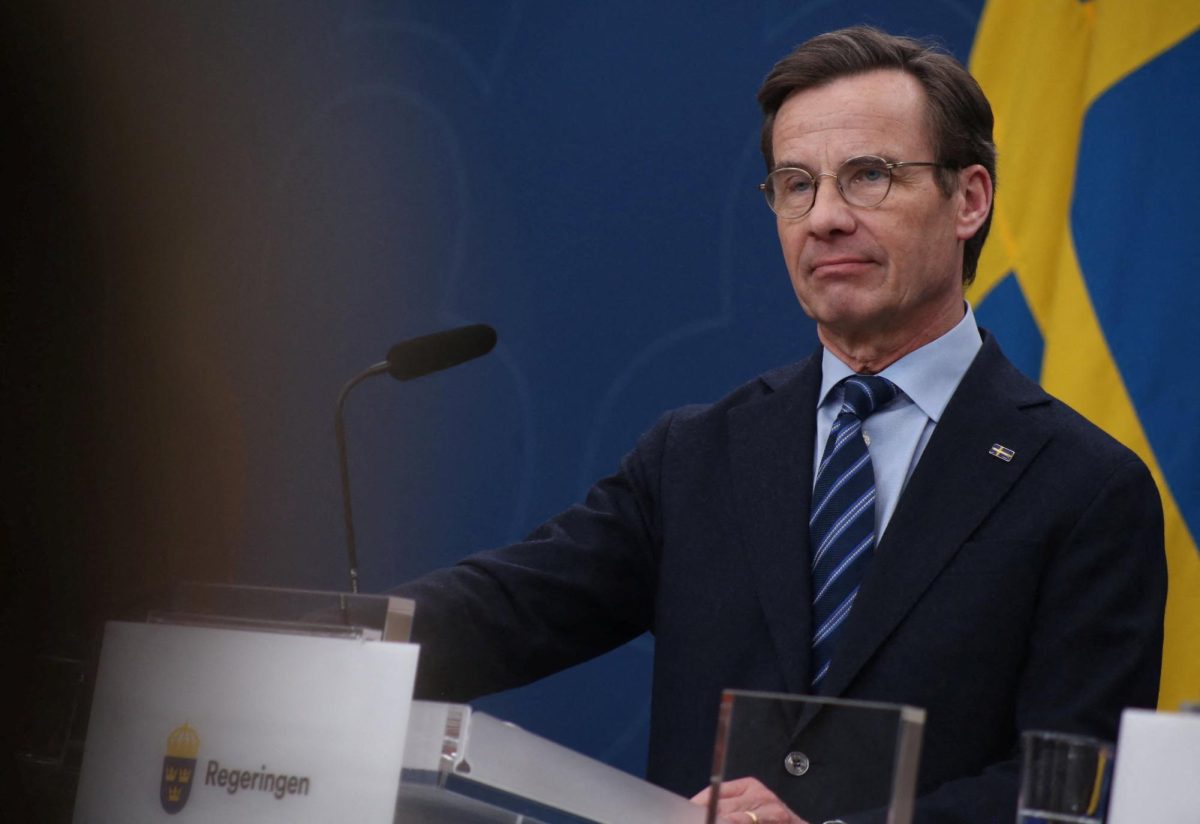
Ulf Kristersson, leader of the center-right coalition’s Moderate Party, announced April 1 of this year that the Sweden Democrats may occupy “important ministerial posts within immigration.” Indeed, in what many consider a watershed moment for Swedish politics, Kristersson intends to enable the Sweden Democrats to hold “big political influence” over “immigration and integration” should his coalition win in September’s election.
The Sweden Democrats already wield considerable influence over the government’s agenda—particularly on immigration and crime—through a 2022 “Tidö Agreement” that gave the party political staff in Government Offices and a seat at the table in policy negotiations, all without holding a single cabinet seat. Kristersson’s announcement, if actualized, would formalize what has been a behind-the-scenes arrangement, granting the Sweden Democrats ministerial power for the first time. Indeed, the “cordon sanitaire” that once isolated the Sweden Democrats from mainstream governance is, by any measure, dissolving.
The Sweden Democrats’ assumption of a more prominent role within the parliament would likely result in an immigration policy that contravenes human rights law. The Sweden Democrats have proposed measures to limit anyone from outside the Scandinavian area and immediate nations from seeking asylum in Sweden.
The growing influence of the Sweden Democrats over the country’s immigration policy reflects a recent hardline adopted across the political spectrum in response to the Refugee Crisis of 2015. Following a long history as a place of refuge for asylum seekers, Sweden’s immigration agency was unprepared for an unprecedented influx of around 163,000 refugees, mostly Syrians, Afghans, and Iraqis.
A perceived mishandling of the crisis by the Social Democrat government, the former ruling coalition before the current center-right Moderates, resulted in many voters becoming disillusioned with Sweden’s liberal immigration policy. In response, citizens were drawn to the strict and prohibitive immigration policies and rhetoric of the Sweden Democrats.
The Sweden Democrats, a populist and nationalist party, claim that the socio-economic issues facing Swedish society are “connected to the nature of Muslim culture.” It is perhaps unsurprising, then, that according to studies conducted by the Pew Research Center over the last decade, 59 percent of Swedes with a positive opinion of the Sweden Democrats have an “unfavorable opinion” towards Muslims.
Jimmie Åkesson, the leader of the Sweden Democrats, has identified Muslim immigrants as the “biggest foreign threat” to Swedish society since “World War II,” citing the “dangers of Islamization.” Constructing a xenophobic and anachronistic conception of Islam and Muslim culture, Åkesson has claimed that Muslim immigrants seek to dismantle Sweden’s secular, liberal identity, thereby eroding the civil rights of their fellow citizens through imposing restrictive religious and cultural norms.
Paradoxically, Sweden’s self-proclaimed identity as a leader in gender-equality and human rights facilitated the emergence of the Sweden Democrats’ ideology. Like other right-wing populist movements appearing across Europe, the Sweden Democrats capitalized on gender to further their anti-immigrant agenda—though not, as one might expect, by pandering to a loss of white masculinity or gender-conservatism.
In contrast, the Sweden Democrats appealed to Sweden’s identity as a secular promoter of gender-equality, claiming that Muslim immigrants posed a threat to Swedish women by seeking to impose a culture that would restrict their personal freedoms. As a result, the Sweden Democrats create a veneer of liberalism that allows voters to be more comfortable expressing Islamophobic sentiments.
The accession of the Sweden Democrats to power exemplifies the diversity of modern right-wing populism, revealing its adaptability to distinct cultures and political dynamics. Populism is no longer a fringe movement that employs a universal rhetoric oriented in neo-Nazi sentiments, but a versatile and rapidly expanding movement that threatens to restructure Swedish politics and Europe at large.
Indeed, according to a 2024 study in International Sociology, populist radical right parties rank among “the top three most powerful forces in one-third of European countries.” The accession of the Sweden Democrats to a more prominent role within Swedish politics mirrors the entrenchment of nationalist and anti-immigrant movements throughout Europe.
These parties cannot be explained away as responses to specific political events, like the Refugee Crisis of 2015. Political scientists Rob Foster and Mark Feldman characterize the populist radical right as an enduring “fluid…and heterogeneous group of parties and narratives.” With Sweden’s September election poised to bring the Sweden Democrats into government for the first time, the populist radical right, through its strategic adaptability and adept manipulation of liberal ideas for conservative purposes, appears poised to gain yet another foothold in European politics—a pattern that European democracies have yet to demonstrate they know how to reverse.