







When Will Staton decided to run for Congress as an independent candidate, he knew he would face tough odds. After all, the Mississippi native has no campaign staff, no party infrastructure and no political experience. But what he did not fully reckon with until he was already in the race was that the rules themselves would be working against him before a single vote was cast.
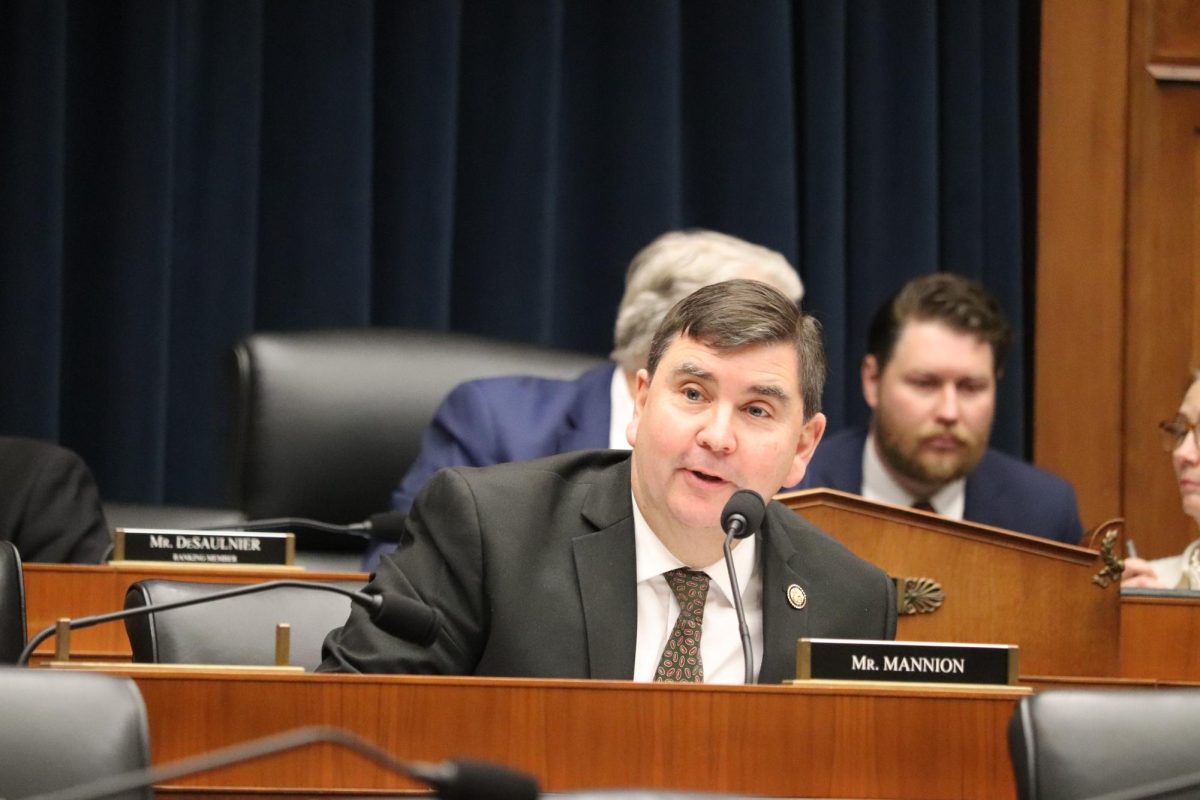
Staton, a 40-year-old former teacher and rather recent Syracuse transplant, announced his independent bid for New York’s 22nd Congressional District in October 2025, entering a race that already included Democratic incumbent John Mannion and three Republican challengers eager to flip the seat back to their party. NY-22 is deep purple: Mannion’s win in 2024 marked the first time the city of Syracuse was represented by a Democrat in a decade.
To appear on the November ballot, Staton will need to collect signatures, a task that some election administrators argue is easier for independents because they are able to solicit signatures across party lines.
Staton, however, dismisses this claim. “Spare me the crap that this is easier,” he said. “I have to get more than twice as many [signatures], and [the collection window for Democrats and Republicans] opens first.”
Staton’s situation is not an accident of bureaucratic design—it is the design. New York state election law sets requirements for independent nominating petitions (how candidates outside the two major parties access the ballot) at a threshold significantly higher than those for Republicans and Democrats. The independent congressional petition ceiling is set at 3,500 signatures, while Republicans and Democrats need only 1,250.
The timing asymmetry compounds this numerical imbalance. Democrats and Republicans have 37 days to collect petition signatures, while independents have 42 days. But because their filing deadlines fall on different calendar dates, party candidates actually start collecting first. This is a significant advantage, as voters who sign party petitions early become ineligible to sign independent petitions.
The disparity is not unique to New York, according to Ballotpedia’s compilation of 2026 congressional filing requirements. Party candidates for Illinois’ House of Representatives need as little as 0.5 percent of their party’s primary electorate in the district, while independents must collect between 5 percent and 8 percent of all votes cast in the district’s last general election—a threshold that, depending on district turnout, can run into the tens of thousands of signatures.
Kentucky offers another stark illustration: An independent candidate running for the House is required to collect 400 signatures while a Democrat or Republican must collect only 2.
In Utah, however, party-affiliated congressional candidates must collect 7,000 signatures, while independent candidates need only 300 signatures or 5 percent of registered voters in the district, whichever is less. Utah has decided that the barrier to independent candidacy should be lower, not higher, than the barrier facing major party candidates. Other states, like New York, have decided the opposite.
These variations reflect an indifference toward democratic access. As Peter Argersinger, a leading historian of American electoral systems, documented in “A Place on the Ballot: Fusion Politics and Antifusion Laws,” electoral rules that appear procedurally neutral have repeatedly been “enacted by politicians who deliberately sought to protect or advance their own interests by manipulating the rules of the game.” Ballot access laws imposing restrictive signature requirements were in many cases written by legislatures controlled by the major parties, with shadow burdens that fell on alternative candidates but not on major party candidates. New York’s 3:1 ratio is thus a contemporary instance of a very old experiment.
The practical effect is a coarse filtering mechanism. Minor party and independent candidates who lack the organizational infrastructure of a major party such as volunteer networks, donor lists and the institutional support that can mobilize hundreds of people in matching T-shirts to collect signatures in a matter of weeks, face a structural disadvantage that has nothing to do with the quality of their ideas or the breadth of their support.
Staton is not the only one who has noticed this structural inequity. In February 2026, Christopher Schmidt, another independent candidate for the House in New York, filed a federal lawsuit against the 3,500 signature requirement, arguing that the asymmetry with the 1,250-signature threshold for party candidates renders it unconstitutional. The case, Schmidt v. New York State Board of Elections, is assigned to U.S. District Court Judge Anthony Brindisi—curiously enough the former representative for NY-22.
Schmidt’s lawsuit is unlikely to succeed. According to Ballot Access News, which has tracked ballot access litigation for decades, independent and minor party candidates have filed similar lawsuits repeatedly over the past fifty years, and courts have consistently upheld such requirements. If the courts will not remedy the imbalance and the legislature has no incentive to do so, then it seems the only path to change is through the kind of political disruption Staton is attempting: the architecture does not un-build itself.
New York State has long been moving in the wrong direction for candidates like Staton. In 2019, a commission established under then-Governor Andrew Cuomo tripled the petition threshold for independents seeking statewide offices such as governor from 15,000 to 45,000 signatures, while keeping it at 15,000 for Democratic and Republican gubernatorial candidates.
Staton is already thinking about all of this ballot math tactically. His signature window runs approximately six weeks, from April into May, and he is asking Colgate students—and anyone else who will listen—to help.
“If there are folks who want to engage, I can share my information,” Staton said during a late February campus visit, “we got the website.”
Even if Staton were to overcome the ballot access obstacle and win the race, he would only be met with another layer of structural exclusion in Washington. Our modern Congress is organized through the architecture of the Democratic and Republican parties since committee assignments—the mechanism by which legislators actually shape legislation—are controlled by party caucuses. There is no independent caucus, hard stop. Moreover, seniority, which determines access to the most powerful committees, accrues within party structures. A newly-elected independent arrives with zero of this clout.
Sophia Ceconi, a Colgate senior who has worked for Democratic Rep. Rosa DeLauro and Democratic Rep. Jim Himes of Connecticut, has seen this infrastructure from the inside. “Congress is practically run entirely through party infrastructure,” Ceconi said. “Committee assignments are controlled by party caucuses, and there is no independent caucus to advocate for this type of candidate. Seats on extremely important and prestigious committees go to members who are buddy-buddy with leadership.”
For NY-22 specifically, the consequences of this exclusion would be concrete. The district encompasses the city of Syracuse, Oneida County and Madison County, a patchwork geography that includes urban poverty, rural agriculture and a semiconductor manufacturing corridor anchored by the planned Micron facility in neighboring Onondaga County. It is a microcosm of Middle America, and Ceconi suspects that the legislative committees most relevant to these constituencies are precisely the ones that an independent would struggle to access. “For a district like NY-22 with genuine economic needs, being shut out of relevant committees like Agriculture or Transportation could pose a real issue,” she said.
There are two sitting independents in the Senate, who ostensibly offer the only available model for what independent congressional success could look like in practice. But while Bernie Sanders of Vermont and Angus King of Maine are both technically independents, they caucus with the Democratic Party. This is how they receive their committee assignments, accumulate seniority, and exercise legislative influence. Sanders has chaired committees; King sits on Intelligence and Armed Services—neither would have access to those seats without the Democratic caucus.
Staton is undeterred. Sanders and King align with one party, accept their infrastructure and vote with them most of the time. But Staton’s vision of independent governance is truly independent—an untested idea in the modern House. He believes the credibility that comes from winning as a genuine independent, beholden to neither party, is a unique form of leverage that party-affiliated legislators cannot touch.
“I’m not forced to play by either team’s rules,” Staton said. “In fact, I think those rules are silly and broken, so my commitment is—if I’m elected as an independent — I’m not going to vote exclusively with either side. I would try to invite myself to lunch with both groups and figure out who the good-faith actors are and what the best ideas from each side are.”
Staton’s own diagnosis of the problem with the two-party system goes beyond ballot access law—he argues that it structurally incentivizes behaviors that make governance worse, punishing the legislators who might want to work across party lines.
“Even the good-faith people who are currently part of the system—you get out there and say, ‘Hey, let’s talk to the other team,’ and all of a sudden, you’re kicked out of your own party, you’re gonna get primaried,” Staton said. “Even if that didn’t happen, half the voting public would look at you and be like, ‘well, you have a “D” or an “R” in front of your name, so I don’t trust you immediately.’ I don’t think there’s any credibility left. I think we have got to come at it from a different place.”
There is empirical support for this. Brookings Institution’s research on the 2018 congressional primaries found that the primary electorate is heavily skewed toward strong partisans, with very few self-identified independents voting in primaries—and that primary voters in both parties skew ideologically toward the extremes, with Republican primary voters more conservative and their Democratic counterparts more liberal. The structural consequence is straightforward: legislators are incentivized to be more responsive to primary voters than to general election voters because primary voters are more unified in their policy preferences and more responsive to incumbents’ policy positions. Staton put it far more bluntly: “The legislator who reaches across the aisle really does risk the wrath of the electorate most likely to punish them for it.”
Princeton professor Frances E. Lee’s 2016 “Insecure Majorities” adds another layer to this primary electorate thesis. Lee argues that the conventional explanation for congressional dysfunction—that the parties have grown ideologically apart — misses the more fundamental point, which is that the two parties have competed for control of Congress at near-parity for decades, and that this hyper-competitive environment has itself changed their incentives. The prospect of collective reward or punishment gives members stronger motivation to cooperate as a party team rather than as individual legislators with differing priorities based on their unique constituents. These structural incentives to behave as partisan actors extend even to ideologically moderate members of Congress.
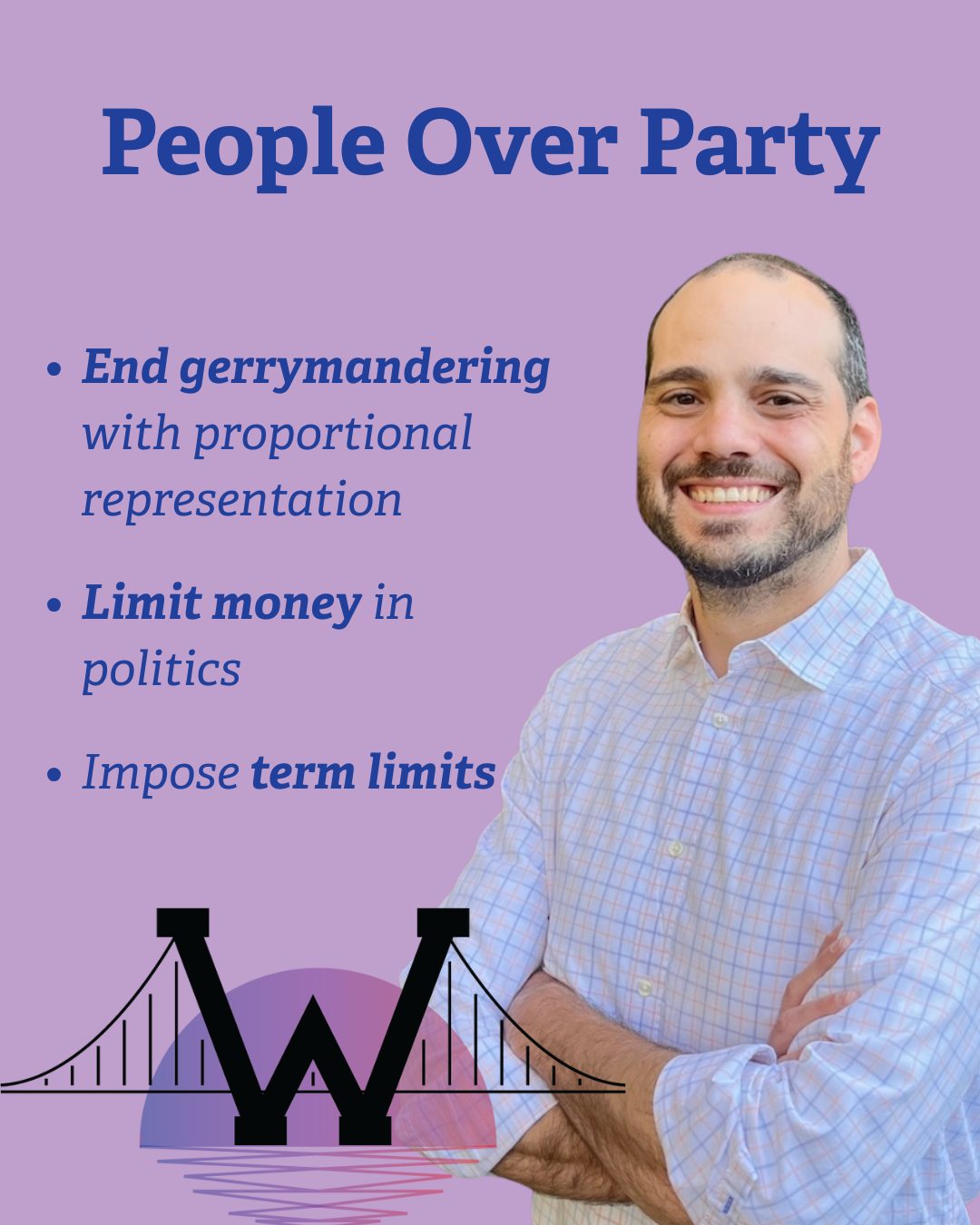
The primary system, in these accounts, is not a neutral mechanism for democratic selection, but rather a gritty sieve that rewards ideological purity and punishes compromise. In safe, gerrymandered districts, the primary election is effectively the general election; the squeeze-out happens before most voters get a chance to participate in the democratic process at all. Staton’s three-prong government reform platform—ending gerrymandering, getting money out of politics and imposing term limits—directly targets this incentive structure. Whether those reforms are achievable is a separate question, but his underlying diagnosis tracks with political science research suggesting that the rules of the game, not just the players, are to blame for the dysfunction.
Staton is not the only independent congressional candidate running in 2026. He says he has begun connecting with a network of similarly positioned candidates around the country—that there are people with campaign experience starting to build shared infrastructure for independents, including fundraising support, media strategy, and advice on best practices.
“I would call it a nascent and grassroots movement,” Staton said. “There is a real and growing movement, and we’re starting to talk to each other.”
The history of third-party and independent movements in American politics offers little encouragement. No third-party candidate has won the presidency since the Republican Party became the second major party in 1856. The last time a third-party presidential candidate won any electoral votes was in 1968, and 1996 was the last time a third-party candidate received more than 5 percent of the national popular vote. Ross Perot’s 1992 presidential campaign remains the modern high-water mark—but despite winning nearly 19 percent of the popular vote, he still failed to get a single electoral vote. This is a clear illustration of the brick wall operating to keep out independents even when public appetite for alternatives exists.
At the congressional level, the record is even thinner. Independent success in the House of Representatives is virtually nonexistent; in the modern era, the only independent elected to the House was Sanders, who served from 1991 to 2007. In other words, there is exactly one modern precedent for what independents like Staton wish to attempt—and even that precedent ultimately opted to caucus with the Democratic Party, something Staton does not plan to do.
But Staton argues that the goal does not have to be about winning—at least not yet.
“Change, especially the kind of change that we really want and need, is more likely to be slow and thoughtful,” he said. Staton believes that if he “can help spread a message” or “empower some people to try a similar effort,” then that change will be quicker to arrive.
The question that this candidacy poses is less about Will Staton and NY-22 than it is about what democratic representation is supposed to look like, and whether the current system is producing it.
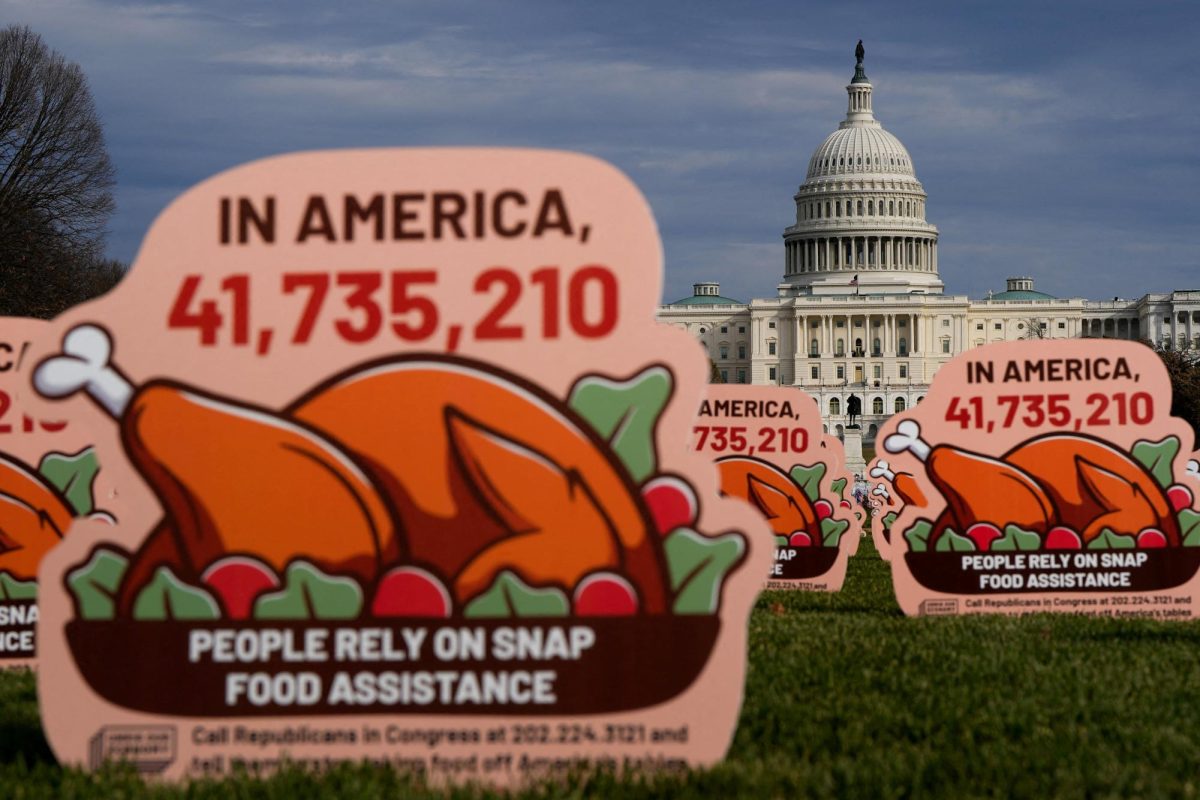
Trust in the federal government has collapsed. According to the Pew Research Center, fewer than one in six American adults trust the federal government to do the right thing most of the time—a historic low. Trust in local government, by contrast, remains comparatively healthy: 61 percent of Americans rate their local government favorably, compared to just 22 percent who view the federal government favorably. The gap between those two numbers is a measurement of something: a sense, widely shared across party lines, that the institutions with the most national power are those least responsive to ordinary people.
Ballot access laws, committee assignment rules, primary structures, campaign finance—none of these are natural features of democratic life. They are systematic choices, encoded in law, but they are modern ones and they are mutable. The question is whether the people who have the power to change the rules have any incentive to do so.
“Both of these groups would rather lose to each other than see someone like me threaten the system,” Staton said. “Which is exactly why I think it’s important to threaten the system.”
Staton’s flinty determination casts independent candidacy as inherently radical—himself, backpack slung over one shoulder, as a political revolutionary for the year 2026. Staton may not win; after all, signatures alone may defeat him. Yet the structure he is running against—the question of who built it, and why it still stands—is worth examining and questioning, regardless of what happens in November.