

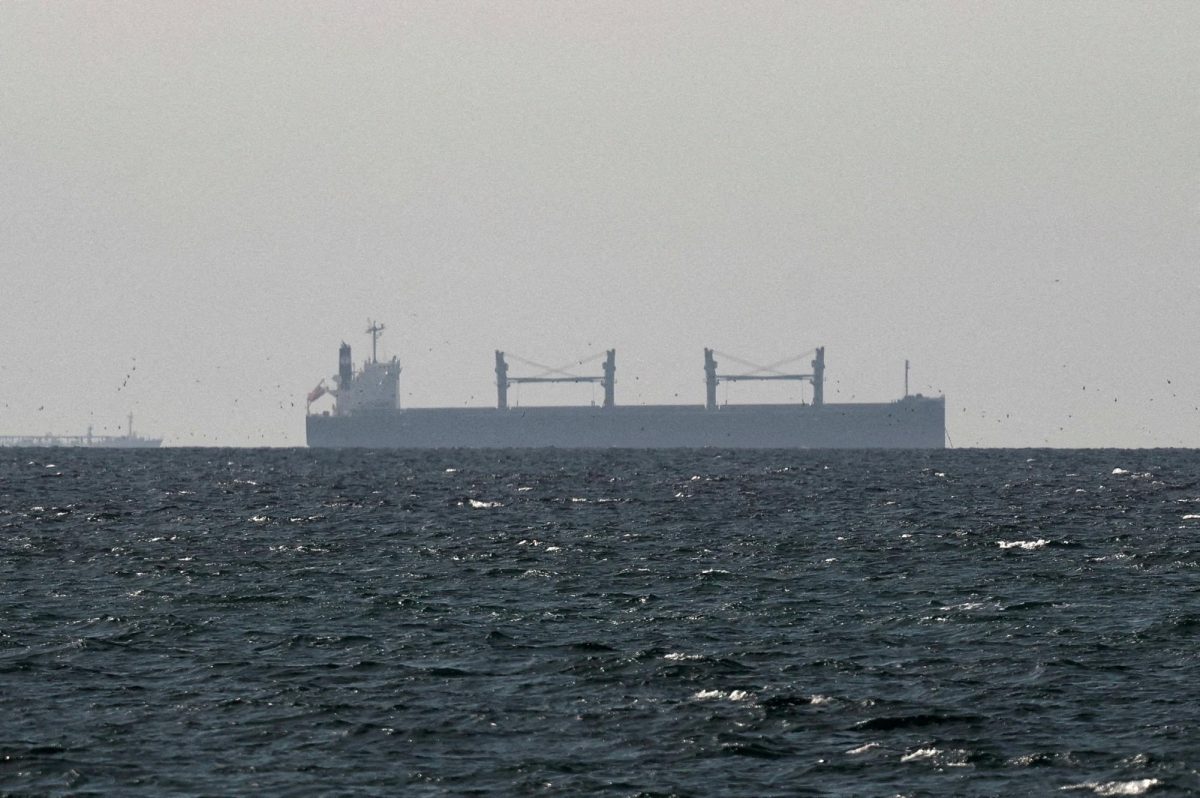







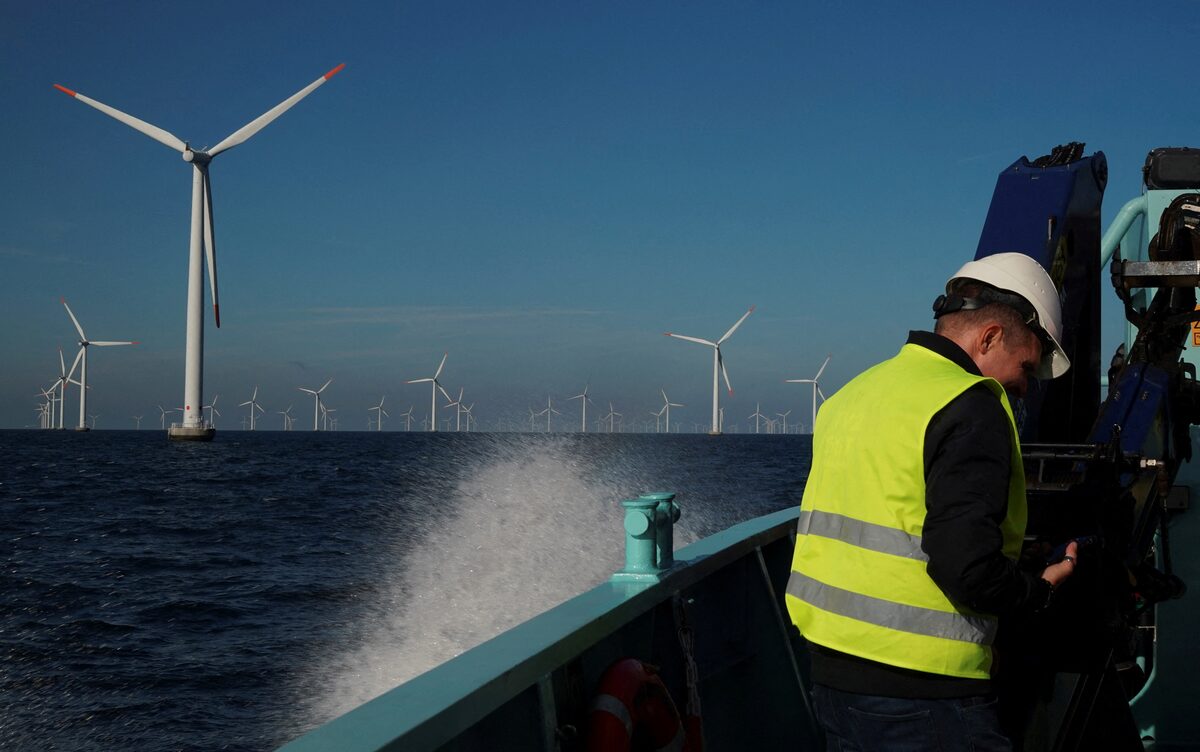
The Trump administration recently paused the development of all offshore wind projects in the United States, citing national security concerns over the impact of wind turbines on military radar systems. The pausing of these offshore wind projects creates significant regulatory uncertainty for American clean energy and deters the investment of private capital necessary for its success.
Ironically, this development is a national security concern because it would compromise the global competitiveness of the U.S. in a changing energy environment that is leaving fossil fuels behind in favor of sustainable sources that are cheap and plentiful, largely shielded from geopolitical tensions, and not harmful to the environment or human health. While the administration’s concern over radar interference is technically valid, the macro-level security threat posed by deterring renewable energy investment and failing to adapt to the changing global environment is more central to long-term U.S. national security interests. These interests must be balanced accordingly. Energy dominance and the ability to out-innovate competitors are both crucial to maintaining U.S. leadership in the international system, so political leaders must do all that they can to support clean energy projects and avoid discouraging the investment necessary to develop a flourishing green sector.
Clean energy is a national security priority. A major reason for American leadership of the international system has been its domination of the energy supply and its ability to translate that domination into strategic advantages. For example, American energy carried the allies to victory in World War II; it allowed for the reconstruction of critical infrastructure in war-ravaged countries through the Marshall Plan to create productive economic conditions and valuable trading partners, and it has recently fueled technology used in everything from transportation to medicine—all outcomes necessary for powering peoples’ lives and ensuring the success of U.S. economic and defense interests. The historical domination of nonrenewable energy has no doubt contributed to American prosperity.
However, nonrenewable energy has significant issues. The environmental issues are well-documented: attaining and harnessing nonrenewable natural resources generates plentiful pollution and waste that can destroy the environment. Exposure to nonrenewable energy is also a significant health risk, contributing to diseases such as cancer, heart disease, and stroke. Oil and gas are subject to extensive geopolitical risks. Despite the supposed energy independence of the U.S.—the price of oil is, indeed, heavily influenced by broader global developments, giving the commodity’s price unexpected volatility. Most importantly, nonrenewable energy is not an efficient source of energy for powering the modern world because, as its name explains, it is nonrenewable. As such, it will eventually run out, and even if it does not, the fact that it is not endlessly available allows its price to fluctuate because demand is virtually guaranteed to outpace supply. Renewable energy does not have these environmental, health, geopolitical or limited-supply concerns.
All of this taken together is a major cause for concern. One of the most significant global developments of the last few years has been the emergence of artificial intelligence. Internationally, there is a prominent belief that the country which gains AI dominance will also achieve global dominance. The two leading contenders in the AI race are China and the U.S. AI requires enormous amounts of energy to train, operate, implement and improve, and this energy demand is in addition to pre-existing energy requirements for powering the world. Thus, the global importance of energy will only increase with future technological developments; quantum computing and other future technologies will all rely on high-capacity, resilient power grids. Considering the relative and potential abundance of renewables—often rendering them cheap and plentiful—as well as global efforts towards green development, clean energy is well suited to fulfill the substantial energy demands of the present and future, as it meaningfully diversifies the grid and increases overall energy capacity.
Given the power of clean energy, it is reasonable to suggest that the country which leads in long-term renewable energy production is the country that will emerge as hegemon of the international system. This country will be able to endlessly power its economy, export energy to other countries for a major profit (to be reinvested into its own national interests), maintain the health of its environment and citizens, and pave the road for significant energy resources to be poured into AI and eventual quantum computing development. Just as the U.S. began to lead global energy production throughout the industrial revolution and post-war era and, thus, became a superpower, the country to unlock renewable and potentially limitless energy will lead the future.
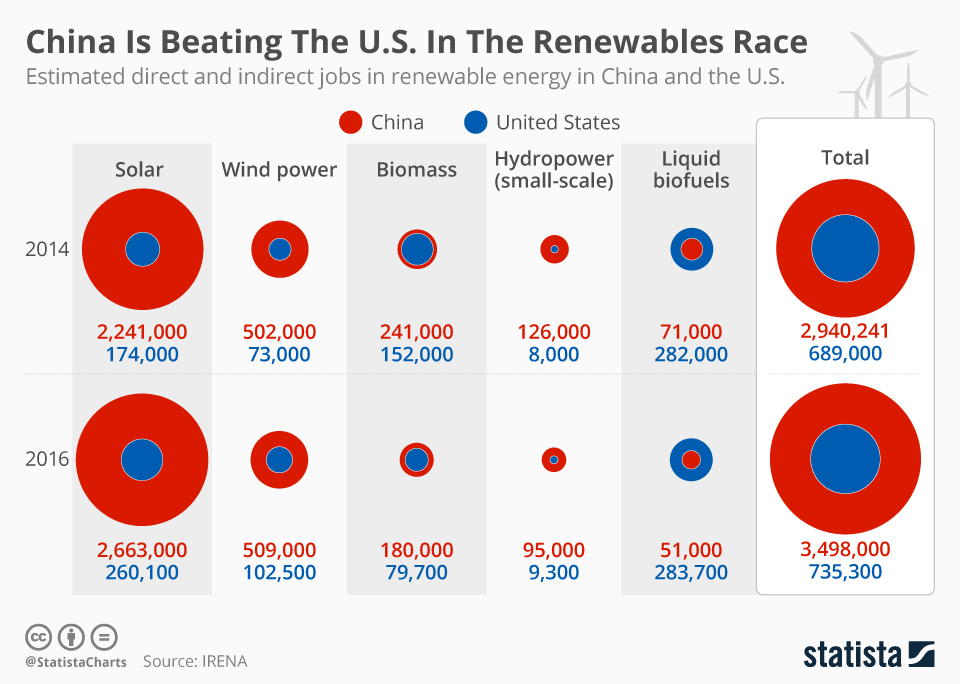
Currently, that country seems to be China. A recent Washington Post analysis outlines this emerging truth. Infrastructure and investment in green energy is dominated by China. In 2024, green energy investment of China was nearly triple that of the U.S. China also leads in many applications of green energy, as evidenced by about 40% of its new vehicle sales being “green” vehicles, compared with roughly 10% in the U.S. While Chinese electric vehicles have largely been prohibited from entering the U.S. market due to recent tariffs, they have flooded other economies, badly disadvantaging the American automotive industry. This relative gap is poised to increase, as incentives for electric cars in the U.S. continue to be slashed.
China also controls the critical rare-earth materials used in much renewable energy production and development, allowing it to leverage its national renewable advantage by obtaining materials cheaply and controlling the supply chains that other countries, such as the U.S., rely on. Finally, Chinese research on clean energy is cited more often than American clean energy research, a key indicator of knowledge and capability.
All of this suggests that, at current rates, China will continue to outpace and out-innovate the U.S. in green-centered industrial policy. China will likely do everything in its power to capitalize on this energy advantage, and it is already creating a web of developing countries dependent on cheap and plentiful Chinese clean energy. This is not an idealistic Chinese effort to increase sustainability, but a calculated, long-term strategy to efficiently power its manufacturing economy and create an export chain for the technology other countries need in order to do the same. The U.S. lagging behind in clean energy only allows China to further its industrial goals and fill the supply chain vacuum left by the U.S.
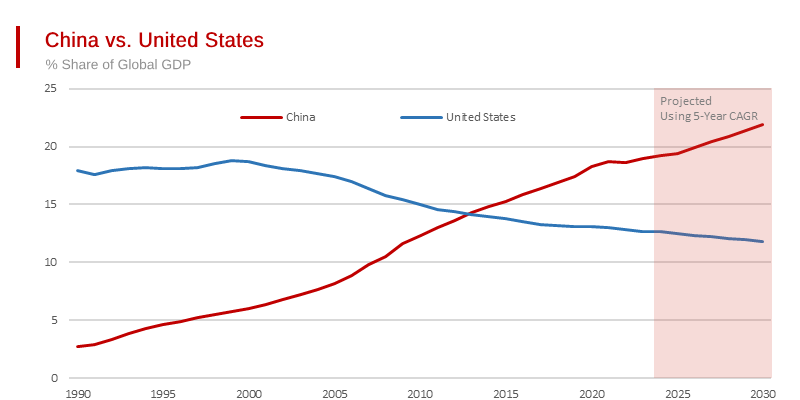
Moreover, China’s dominance in the renewable energy sector is a major national security concern. Clean energy both is and will be necessary for all vital U.S. interests, including defensive capabilities and economic success. In any prospective war, the winners will likely be those countries with the ability to most efficiently produce supplies to keep up with wartime demands. Without clean energy infrastructure, the U.S. will not be able to produce equipment fast enough to compete with a country like China.
Additionally, green companies will find it difficult to operate in the United States with regime uncertainty from government-imposed barriers on renewables. Thus, other countries stand to benefit from potentially trillion-dollar investments at the expense of the U.S. Perhaps the most pressing national security concern is the disruption of America’s position as the overwhelming destination for talent; if China develops relatively limitless energy capabilities while the U.S. lags behind, the brightest and most capable scientists will no longer see America as their ideal research environment. Consequently, China will overtake the U.S. as the scientific and technological powerhouse of the world. All of this, needless to say, is highly damaging to U.S. interests.
Aside from a macro-centric national security perspective, Chinese victory in renewable energy would also hurt Americans on an individual level. As renewables are adopted and eventually overtake nonrenewables, energy costs will increase, because this energy will be imported rather than domestically produced. Jobs in the green energy industry would go to China instead of the U.S., so Americans would miss out on the opportunities in an increasingly lucrative employment sector. Furthermore, companies with high energy needs might compensate for having to pay more to import energy by employing fewer people or reducing salaries, impacting jobs that may be wholly separate from the clean energy sector.
Returning to the recent pausing of wind projects, this decision had several major ramifications. Firstly, it significantly reduced stock prices for the companies involved in U.S. wind projects. The decision also threatened around 17,000 jobs connected to these projects, and—by introducing significant regulatory and political risk to the green sector—it reduced American credibility as a destination for technological investment. It also prohibited access to sufficient energy to power Manhattan, energy that could have been used to develop critical technology such as AI.
Furthermore, by restricting American participation in offshore wind production, the pause reduces U.S. expertise in renewables and limits any relative gains the U.S. would have had in catching up to China. Yet another long-term impact is that the U.S. is undermined as a destination for capital; the companies involved lost investments after not being able to fulfill these projects in the expected timeframe, a direct result of the barriers to energy development from the uncoordinated vetting process.
As mentioned prior, the administration has cited possible threats to national security as the cause for pausing these projects, pointing to potential interference with ground radar systems. However, it refuses to provide adequate proof of this being a threat, claiming that the evidence is classified. This is despite a Navy veteran claiming that “rigorous reviews” were undergone to ensure that the projects were safe. Asserting that substantial evidence is present but refusing to provide it introduces information asymmetry and unavailability that is detrimental to long-term investment. Without adequate transparency, companies may conclude that the political risks of clean energy investment in the U.S. are too high, creating capital flight towards seemingly more stable international markets.
All of these actions, including the pausing of wind projects, have disincentivized clean energy investment and reincentivized nonrenewable energy use. For example, Ford has recently abandoned its original EV investment plan and altered its strategy to produce more hybrid vehicles that are largely reliant on fossil fuels. Ford is projecting a reduction in profits by $19.5 billion, and in the long term, this will reduce its competitiveness with emerging Chinese EV manufacturers.
Internationally, it was in Ford’s interest to develop EV capabilities to prepare for and begin the transition to green vehicles, but the administration’s slashing of renewable benefits and the reintroduction of incentives for gas-powered cars have made it impractical to do so. While Chinese companies expand their EV dominance and prepare for the future, current restrictions are leaving American companies and their employees in the dust. If this broader trend continues, American industry will fall behind, and—with it—U.S. leadership of the international system. Americans may then need to deal with an order dominated by an authoritarian regime with many interests contradictory to those of the U.S.
This is all worrisome for Americans because the limitation of these wind projects is emblematic of a broader U.S. restriction on clean energy. Yes, wind alone cannot power an economy or act as a lone source of energy. However, wind power is a substantial opportunity to create a diversified energy supply, and encouraging wind energy projects now will build up the infrastructure and expertise for major sustainable alternatives, facilitating the American transition away from fossil fuels. Combined with solar, hydro, and nuclear fusion investment, the U.S. sustainable energy industry can become a burgeoning sector that may develop alongside the temporary use of fossil fuels, as nonrenewables are currently necessary despite the likelihood of their decline. Clean energy is the future, and a diverse supply of renewables will help national security and the Americans who work to preserve it.
The solution to this issue is not to stray further away from clean energy, doubling down on nonrenewables. A strategy that addresses legitimate security concerns (such as radar interference), makes significant efforts to work with businesses to allow construction to proceed, and is transparent to the public and other potential investors is necessary for the adaptability of the American energy sector and reduction of regulatory risks. This would allow the U.S. to maintain its status as the foremost destination for risk capital and investment. The Trump administration should reconsider its position on sustainability by examining the negative employment, investment, and security implications a shift away from renewables would represent. If it still wants to lead the international system, the U.S. must adapt to the growing advantages of clean energy. With its scientific attraction, extensive renewable resources, and leading soft power as a protector of democracy and freedom, the U.S. has every reason to maintain its position at the global forefront.